
UAD Explores Second Degree Collaboration with QASPIR and American Public University
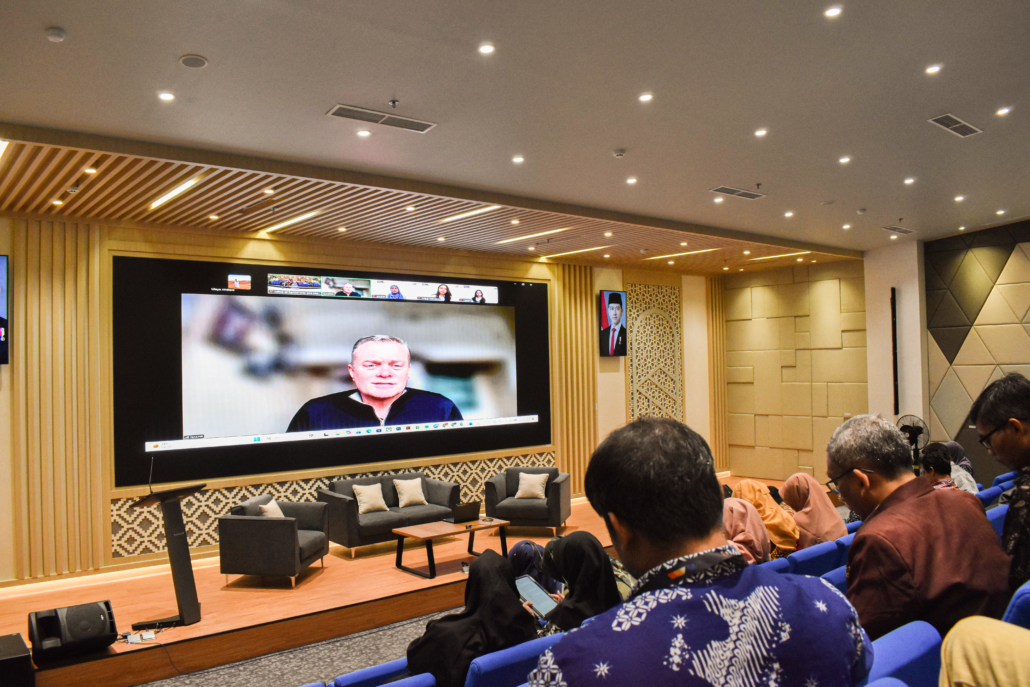
Yogyakarta – Ahmad Dahlan University (UAD), through its Office of Cooperation and International Affairs (OCIA), held an Information Sharing Session with QASPIR (Quality Assurance, Strategic Planning and Institutional Research) to explore opportunities for international collaboration in establishing a Second Degree Program in partnership with American Public University (APU). Conducted online, the session was attended by faculty leaders, heads of study programs, and representatives from various academic units across UAD.
In his opening remarks, Afitr Istiandaru, S.Pd., M.Pd., Head of the International Cooperation Division at UAD, explained that the meeting was a follow-up to previous discussions between UAD and QASPIR. The session aimed to explore collaborative initiatives that could provide added value for UAD students, particularly in the fields of Business and STEM (Science, Technology, Engineering, and Mathematics).
“This forum provides an opportunity for us to learn more about the programs offered by QASPIR while exploring broader avenues for future collaboration. We invited deans, vice deans, heads of study programs, and program secretaries so they could gain first-hand insights into this opportunity,” he said.
During the presentation, Stuart Blacklock, Founder and Chief Executive Officer of QASPIR, introduced the organization’s role in enhancing higher education quality through transformative learning, strategic planning, and international partnerships. He explained that QASPIR has collaborated with nearly 150 universities across 28 countries, including dozens of higher education institutions in Indonesia.
In addition to supporting faculty capacity development through transformative learning initiatives, QASPIR also facilitates the Second Degree Program in collaboration with American Public University (APU), one of the largest online universities in the United States, accredited by the Higher Learning Commission (HLC).
Stuart explained that the program enables UAD students to earn a second bachelor’s degree without interrupting their primary studies. Students who have completed at least 90 academic credits or have reached their sixth semester are eligible to enroll in the online program by completing an additional 30 credits over the course of one year.
“The program is designed to be affordable, flexible, and accessible to more students. Through a fully online learning system, participants can earn a degree from a U.S. university without incurring overseas travel or living expenses while still benefiting from an international academic experience,” he explained.
He further noted that the Second Degree Program allows students to expand their expertise across disciplines. For example, Computer Science students may pursue concentrations in Artificial Intelligence, Data Science, or Information Technology Management, while Business students can specialize in areas such as Entrepreneurship, Marketing, or Supply Chain Management.
According to Stuart, earning a second degree is becoming an effective strategy for enhancing graduates’ competitiveness in an increasingly demanding job market. He pointed out that Indonesia produces more than 1.5 million graduates annually in business and technology-related fields, making additional interdisciplinary qualifications increasingly valuable to employers.
During the discussion session, UAD participants raised various questions regarding program implementation, including experiences with partner universities in Indonesia, tuition and financing mechanisms, academic procedures, and opportunities for interdisciplinary study. The discussion also explored how the program could strengthen graduates’ competitiveness in both national and international labor markets.
Responding to these questions, Stuart explained that the Second Degree Program is not limited to current students but is also open to alumni seeking to enhance their professional qualifications or expand their career opportunities. He emphasized that holding two complementary degrees can provide broader access to international employment opportunities while strengthening graduates’ competitiveness in the era of digital transformation and the rapid advancement of Artificial Intelligence (AI).
In his closing remarks, Afitr Istiandaru expressed his appreciation to QASPIR for delivering a comprehensive presentation. He noted that the information shared during the session would serve as an important reference for UAD in evaluating and developing international programs that provide tangible benefits to its students.
Through this meeting, UAD once again reaffirmed its commitment to expanding its global network and creating meaningful international learning opportunities that align with the evolving demands of the global workforce and the future of higher education.

